Artificial Intelligence (AI) has undergone rapid evolution in recent years, transforming from a niche field of academic research into a booming industry. One of the most notable advancements has been in the development of language models, which are designed to understand and generate human language. While much of the spotlight has been on large language models (LLMs) like GPT-3, there is a growing trend towards the development and deployment of smaller, more efficient models. These small language models (SLMs) offer numerous advantages and are becoming a key focus for AI companies seeking substantial profits. This blog explores the reasons behind this shift, the benefits of SLMs, and the strategies companies are using to leverage them for business success.
Large language models like OpenAI’s GPT-3 and Google's BERT have garnered significant attention due to their impressive capabilities. These models, with billions of parameters, can perform a wide array of tasks, from translation to summarization, and even creative writing. However, their size comes with considerable drawbacks, including high computational costs, long training times, and substantial energy consumption.
In contrast, small language models are designed to be more efficient while maintaining a high level of performance. These models typically have fewer parameters and require less computational power, making them more accessible and sustainable. Companies are increasingly recognizing the potential of SLMs to provide scalable AI solutions without the prohibitive costs associated with LLMs.
One of the primary advantages of SLMs is their cost efficiency. Training and deploying LLMs can be prohibitively expensive, often requiring specialized hardware and significant energy resources. SLMs, on the other hand, can be trained and run on more common and affordable hardware, reducing both initial investment and ongoing operational costs.
SLMs offer faster training times and lower latency during inference, making them ideal for real-time applications. This speed advantage allows companies to scale their AI services more effectively, deploying multiple models across different applications and environments without encountering significant performance bottlenecks.
The energy consumption of LLMs has raised environmental concerns, as these models require vast amounts of electricity to operate. SLMs are more energy-efficient, aligning with growing demands for sustainable and environmentally friendly AI solutions. This efficiency not only reduces operational costs but also contributes to corporate social responsibility goals.
SLMs can be easily fine-tuned for specific tasks or domains, offering greater flexibility compared to their larger counterparts. This customization capability allows companies to develop tailored AI solutions that address unique business needs, enhancing the overall effectiveness and user experience.
AI companies are increasingly targeting niche markets where the capabilities of SLMs can be fully utilized. For example, SLMs can be deployed in customer service chatbots, where the focus is on specific types of interactions rather than a broad understanding of all possible queries. By concentrating on niche markets, companies can provide highly specialized and effective solutions.
Integrating SLMs into existing products can significantly enhance their functionality. For instance, integrating a small language model into a text editor can improve grammar checking, suggest contextually relevant vocabulary, and provide real-time feedback. Such enhancements can differentiate products in competitive markets, providing a clear value proposition to users.
The efficiency and flexibility of SLMs open up possibilities for developing new AI-driven applications. From personalized learning platforms to interactive gaming experiences, SLMs can be the backbone of innovative solutions that were previously infeasible due to the constraints of LLMs.
Collaborations between AI companies and academic institutions can accelerate the development of SLMs. By sharing knowledge and resources, these partnerships can push the boundaries of what SLMs can achieve, leading to new breakthroughs and commercial opportunities. Additionally, open-source initiatives can foster a community-driven approach to improving and deploying SLMs.
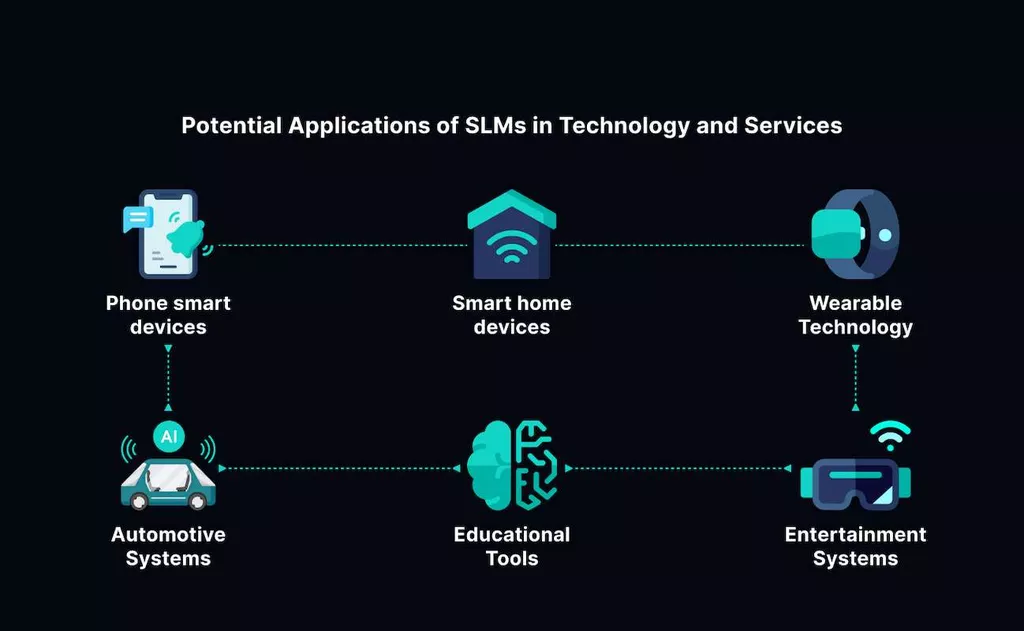
Many companies have successfully deployed SLMs in chatbot technology to enhance customer service. For instance, a financial services company might use an SLM to handle common customer inquiries about account balances, transaction histories, and branch locations. These chatbots can operate efficiently, providing quick and accurate responses without the need for extensive computational resources.
In the healthcare sector, SLMs have been used to develop diagnostic tools and virtual health assistants. These models can analyze patient symptoms, provide preliminary diagnoses, and offer medical advice, all while operating on standard hardware. This capability is particularly valuable in remote or resource-limited settings where access to advanced computational infrastructure is limited.
SLMs are also being leveraged for content generation in marketing and media. Companies can use these models to create personalized advertisements, social media posts, and even news articles. The ability to generate high-quality content quickly and cost-effectively provides a significant competitive advantage in the fast-paced digital marketing landscape.
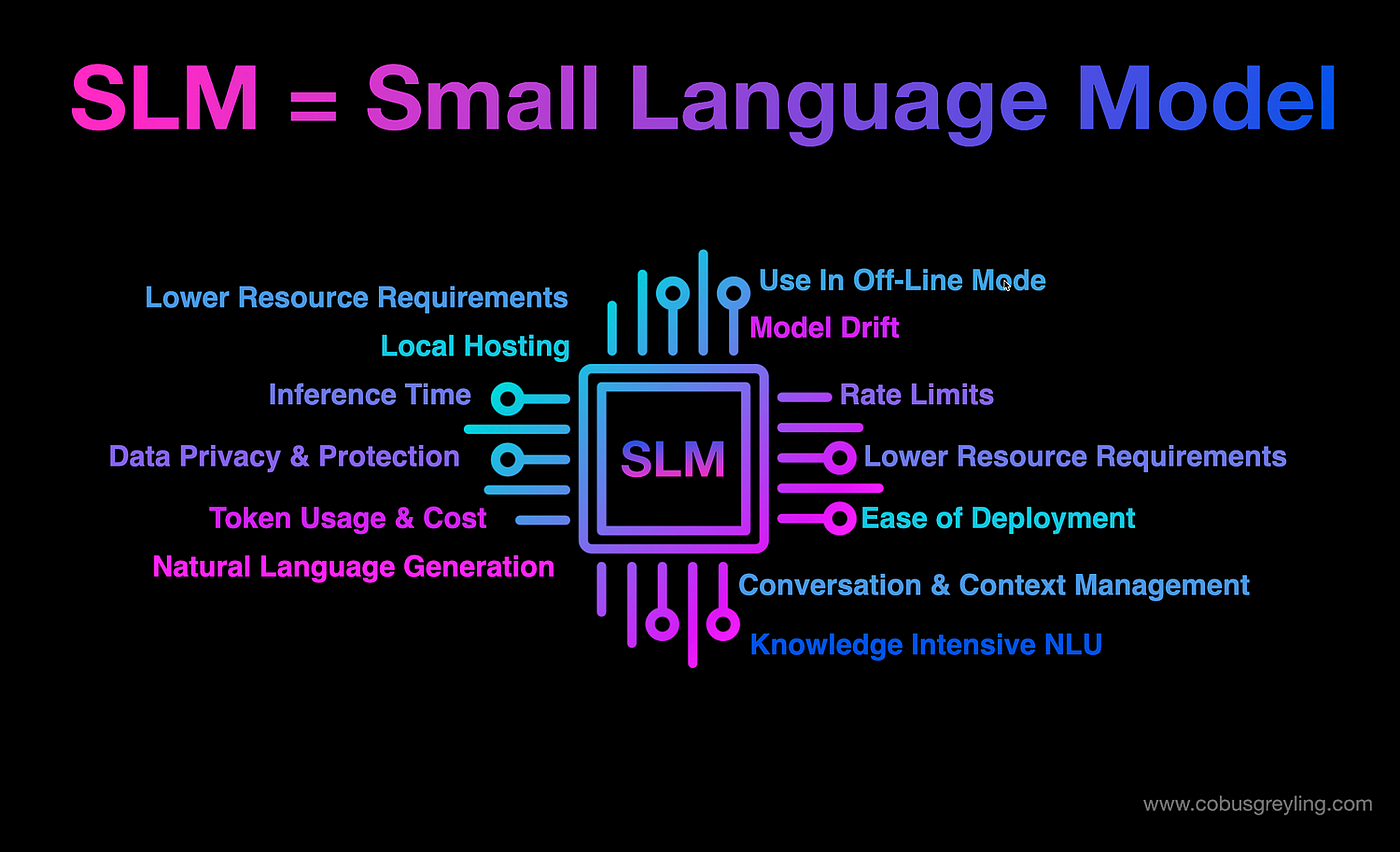
The development of SLMs is a dynamic and rapidly evolving field. Ongoing research aims to further enhance the capabilities of these models, making them even more efficient and versatile. Innovations in model architecture, training techniques, and optimization algorithms are expected to drive the next generation of SLMs.
As the benefits of SLMs become more widely recognized, their adoption is likely to increase across various industries. Companies of all sizes can leverage these models to improve their operations, develop new products, and stay competitive in an increasingly AI-driven world.
While the shift towards SLM addresses some environmental concerns, ethical considerations remain paramount. Issues such as data privacy, algorithmic bias, and the impact of AI on employment must be carefully managed. Companies developing and deploying SLMs have a responsibility to ensure that their technologies are used ethically and transparently.
The trend towards small language models represents a significant shift in the AI landscape. These models offer a compelling combination of cost efficiency, speed, scalability, and sustainability, making them an attractive option for companies seeking to leverage AI for business success. By targeting niche markets, enhancing existing products, developing new applications, and fostering collaborative research, AI companies can unlock substantial profits while driving innovation in the field. As the technology continues to evolve, the potential of SLMs to transform industries and improve lives is vast, promising an exciting future for artificial intelligence.